vrijdag 28 oktober 2016

"The Player of Games" by Iain M. Banks

"There's something very... I don't know; primitive, perhaps, about you, Gurgeh. You've never changed sex, have you?' He shook his head. 'Or slept with a man?' Another shake. 'I thought so,' Yay said. 'You're strange, Gurgeh.'"

Jernau Gurgeh is a famous player of games - he wins just about every contest he enters and he's getting bored. When he's proposed to travel to a faraway empire to play a game called Azad, he's a bit reluctant - it would mean being away for several years and he doesn't really feel like it. But he does see it as quite a challenge and a bit of blackmailing is enough to make him decide to take on the proposal. Azad turns out to be quite a complex game, which is really important in the Empire of Azad. It doesn't only require lots of insight, it also determines social rank and political status. In fact, it is so important a game that it decides who will rule the Empire. Gurgeh is up against players who have studied the game all their lives, so he doesn't really expect to do very well, although he hopes to hold out at least a few rounds against the 12,000 other contestants. But there are factions that will do anything to prevent Gurgeh from doing well and he soon finds out his life is in danger.

It took me a bit of time to get into this novel, as with lots of science fiction. The Culture - the society Gurgeh belongs to - is utterly alien. As a reader you are confronted with people who change gender ever so often (so they can be both father and mother); brains that grow new bodies; sentient drones and talking spaceships ... But once I got to see through the weirdness of all this, I saw a fascinating story unfolding. Banks builds not one but two very interesting worlds: the Culture (which is the background to all of his science fiction novels) and the Azad Empire, which is a violent, cruel and racist place. Gurgeh is an interesting character, but the drones are the real stars in this novel. "The Player of Games" is an example of clever science fiction, which is exciting, thought-provoking and at times really funny. In fact, Banks reminds me of Robert A. Heinlein at times, and comes across as a modern version one of my favorite SF authors. Excellent novel!

Author: Iain M. Banks
Title: The Player of Games
Publisher: Orbit, London
Year: 2013 (orig. 1988)
Number of pages: 309 p.
ISBN: 9781857231465

maandag 17 oktober 2016

"Gotcha!" van Sterre Carron

"En dan schalt er plotseling een gekrijs door de luidsprekers dat door merg en been gaat. Ik moet mijn uiterste best doen om de auto onder controle te houden. 'Hij is hier, mama. Hij is hier!' Ik hoor gekletter en de woorden: 'Niet doen, niet doen...' En dan niets meer."

"Indra", de vorige thriller rond hoofdinspecteur Rani Diaz, eindigde op een ware cliffhanger. Fans moesten dus lang wachten op de ontknoping (hoewel: aan het tempo dat Sterre Carron boeken produceert is het nooit echt lang). Toch laat de auteur de lezers nog even op hun honger zitten.

In de lange 'proloog' van "Gotcha!" gaan we tien jaar terug in de tijd en maken we kennis met Sofia, een arts die na een bijzonder traumatische ervaring, waarin ze zowat alles verliest wat ze liefheeft, naar Guinee in Afrika trekt om daar voor Artsen zonder Grenzen te werken. Pas na zo'n veertig bladzijden zijn we terug in het heden, verschijnt Diaz ten tonele en wordt het open einde van "Indra" netjes afgerond. Uiteraard worden de hoofdinspecteur en haar team spoedig weer geconfronteerd met een heel lugubere ontdekking. De vondst van enkele afgezaagde ledematen doet in het politiekorps de wenkbrauwen fronsen, want elk spoor naar een mogelijke dader lijkt dood te lopen. Ondertussen volgen we ook het levensverhaal van Sofia doorheen de laatste tien jaar en langzaamaan wordt duidelijk dat de zaak waaraan Rani Diaz werkt, iets te maken heeft met Sofia's lijdensweg van zoveel jaren geleden.

Het begint stilaan een typische Sterre Carron-traditie te worden om -naast Rani Diaz- een hoofdpersonage te introduceren waarvan we het dramatische levensverhaal voorgeschoteld krijgen, dat op het eerste zicht niets met de plot te maken heeft. Tijdens het lezen van "Indra" had ik voortdurend de indruk dat het verhaal van het titelpersonage overbodige ballast was in het verhaal. Tegen het einde echter bleek dat de uiteenzetting van de tragische gebeurtenissen echt wel nodig was om Indra door en door te leren kennen en de ontwikkelingen van het verhaal te verklaren.

En de auteur heeft me begot toch weer liggen, zeker! De lange passages in "Gotcha!" over Sofia's leven in Guinee en de hele ebola-affaire leken me ditmaal echt wel bij de haren gesleurd. Maar ook nu slaagt de auteur er weer in om de twee verhaallijnen netjes in elkaar te laten overlopen.

Goed, ik moet ook eerlijk zijn (dat heb ik Sterre Carron trouwens beloofd): "Gotcha!" kon me minder boeien dan "Indra" en andere thrillers van de auteur. Daarmee is het voor mij ook de eerste keer dat ze geen grote stap vooruit zet met haar nieuwste boek. Dat heeft alles te maken met het personage van Sofia, dat bij lange na niet zo'n indruk op me achterliet als Indra. Heel de ontknoping leek me ook wat vergezocht en onwaarschijnlijk.

Op momenten dat ik minder geboeid word door het verhaal, zijn er ook dingen die me lichtelijk beginnen te storen. De eenvoudige -soms zelfs wat simplistische- stijl, de vaak vreemde woordkeuze, soms 'kromme' zinnen en onnatuurlijke dialogen.

Nog een oud zeer dat ik in mijn recensie van een vorig boek al aangaf en dat ook hier weer de kop opsteekt: Sterre Carron bevolkt haar romans steeds met interessante vrouwelijke personages, maar de mannen komen er meestal bekaaid af. Ik ben er nochtans van overtuigd dat er ook in Mechelen interessante mannen rondlopen... Niet dat het een echt struikelblok is, maar het knaagt allemaal toch een beetje aan de geloofwaardigheid.

Dat alles is overigens geen kritiek op Sterre, enkel een teken dat ik normaal gezien misschien niet echt tot het doelpubliek van de auteur behoor. Het spreekt alleen maar voor haar dat ik haar boeken blijf lezen en écht appreciëren, ook "Gotcha!", ondanks de bedenkingen.

Laat dit dus niemand ontmoedigen om "Gotcha!" te lezen. Fans weten wat ze kunnen verwachten en ook nieuwe lezers zullen zich er echt geen buil aan vallen als dit het eerste Carron-proevertje is dat ze voorgeschoteld krijgen. Ikzelf blijf erop vertrouwen dat Sterre me volgende keer weer omverblaast.

Auteur: Sterre Carron
Titel: Gotcha!
Uitgeverij: Witzand
Jaar: 2016
Aantal bladzijden: 389 blz.
ISBN: 9789492011541

zaterdag 15 oktober 2016

"The Pale Horseman" by Bernard Cornwell

“And that, too, was the truth, that a man cannot step back from a fight and stay a man. We make much in this life if we are able. We make children and wealth and amass land and build halls and assemble armies and give great feasts, but only one thing survives us. Reputation. I could not walk away.”

"The Pale Horseman" is the second in Bernard Cornwell's "The Last Kingdom" series, which chronicles the reign of Alfred the Great, seen through the eyes of (the fictional) Uthred of Bebbanburg. You can find my review of part I here.

At the start of the story, Uthred has just won a major battle for Alfred, killing the mighty Viking Ubba Lothbrokson in the process. But his rival, Odda the Younger, claims the victory and instead of being rewarded, Uthred is humiliated in front of a large crowd. Disgusted, Uthred steals one of the king's ships and goes on a raiding spree. Fate leads Uthred back to Alfred, though, and he ends up swearing allegiance to the king. When the Danes massively invade Alfred's Wessex, Uthred will have to fight the people that raised him, including his best friend Ragnar.

Britain in the 9th century was a dark and forbidding place, with the constant threat of the invading Vikings forcing uneasy alliances between former rivals. Bloody battles and gruesome killings galore in this era. This book has all that and more. Cornwell has a knack of having history come alive, and this book is no exception - it's a fast-paced and exciting story, that Cornwell manages to cram with historical details without slowing the story down. The problem with both "The Last Kingdom" and "The Pale Horseman" is that the story and some of the characters are very similar to Cornwell's fantastic "Warlord" trilogy (one of the best things I've ever read). Only the story isn't quite as engaging, the characters just tad less likeable and the whole setting not as extraordinary. And while "The Last Kingdom" still had Uthred's fascinating 'coming-of-age-' story, "The Pale Horseman" lacks this extra dimension. It's still an excellent read, though, and I'll probably read at least some of the other novels in this series. But not right away.

Author: Bernard Cornwell
Title: The Pale Horseman
Publisher: Harper, London
Year: 2015 (orig. 2005)
Number of pages: 415 p.
ISBN: 9780008139483

zaterdag 8 oktober 2016

"The Night of the Mi'raj" by Zoë Ferraris

"He was just about to speak again when the door opened behind them, and a woman entered the room. There would, of course, be female examiners to handle the female corpses, but seeing one in the flesh was a shock. She wore a white lab coat and a hijab, a black scarf on her hair. Because her face was exposed, he averted his gaze, blushing as he did so."

Nouf ash-Shrawi, daughter of a rich Saudi Arabian family, mysteriously disappears shortly before her wedding. Nayir, a desert guide and friend of Nouf's brother, is asked to look for her. Very soon, her body is found. Apparently, Nouf ran away from home and accidentally drowned in a flood. The case is officially closed. But Nayir suspects there's more to the case and is convinced that a crime is being covered up. His suspicions are confirmed by Katya Hijazi, a forensic scientist who helped examine Nouf's body. Nayir will have to work together with Katya to discover the truth. Which is not an easy task, as Nayir is very traditional in his views on the role of women, and Katya is a free-fought young woman, who would like no less than to do away with these ideas. Initially very reluctant to be in each other's company, Nayir and Katya start to understand, respect and like each other.

"The Night of the Mi'raj" is both a crime novel and an intriguing look at Islamic culture. It succeeds best at the latter. The strength of the novel lies in the two main characters and the way they interact - Nayir's traditional ideas constantly clash with Katya's progressive mindset. It certainly adds to the mystery layer of the book, which is an okay detective story, but not really that inventive or clever. Will this kind of ethnological crime fiction be the next big thing after historical crime fiction and Dan Brown-like thrillers? I certainly wouldn't mind.

Author: Zoë Ferraris
Title: The Night of the Mi'ra (aka "Finding Nouf")
Publisher: Abacus, London
Year: 2009 (orig. 2008)
Number of pages: 360 p.
ISBN: 9780349120324

zondag 25 september 2016

"Dolmen" van Johan Deseyn

"De pijn was kort en onaanvaardbaar. Zijn onderlichaam was tot boven het bekken weg- en dichtgebrand. Marks hersenen kregen de tijd niet om de pijn en de gruwelijke werkelijkheid te registreren."

Ik weet niet wat er mis is met genrebenamingen als 'sciencefiction' of 'horror', maar tegenwoordig blijken deze woorden uit de gratie te zijn gevallen bij uitgevers. Neen, nu moeten het allemaal "thrillers" zijn: "futuristische thriller" heet dat dan, of "duistere thriller" in het geval van Johan Deseyns nieuwste "Dolmen". Terwijl de boeken van Deseyn eigenlijk gewoon nog het best beschreven worden als "bloed-en-splatter horror".

"Dolmen" vertelt het verhaal van de ondergang van het Amerikaanse dorpje "Dolmen's Hill" en zijn inwoners. Dat is overigens geen spoiler, want de auteur zelf laat ons in de proloog al weten dat Dolmen's Hill verleden tijd is en dat zowat iedereen het bijltje erbij neerlegt. Het begint allemaal wanneer een mysterieuze oude dame zich in het dorp vestigt. Tegelijkertijd strijkt ook onverwacht een circus neer op de terreinen van Mort Zullmeyer, die daar niet gelukkig mee is, zeker niet wanneer hij een van zijn koeien volledig verscheurd terugvindt. Het is het eerste van een schier oneindige reeks extreem bloedige incidenten in Dolmen's Hill. De politie probeert orde op zaken te stellen, maar merkt al snel dat ook zij niet opgewassen zijn tegen het onnoemelijke kwaad waarmee het stadje wordt geconfronteerd.

De boeken van Deseyn worden bevolkt door vele lelijke, stinkende, vadsige en/of onsympatieke figuren, die zich al rochelend, schijtend, vloekend of andermans man/vrouw neukend doorheen het verhaal begeven. Met zijn uitermate negatieve woordkeuze wil Deseyn vooral een sfeertje van afkeer opwekken. En dat - in dit geval - 588 bladzijden lang, wat echt wel wat te veel van het goede is. Een lichtpuntje hier en daar, wat subtiliteit, een paar sterke, uitgewerkte personages en 150 bladzijden minder zouden zijn boeken al zoveel interessanter maken.

Maar ik vrees dat ik nog wel wat heb om over te mopperen. De auteur gaat enkele keren terug naar het verleden, waarin hij o.a. dinosaurussen laat opdraven en kennismaken met de oeroude horror die Dolmen's Hill teistert. Hij beschrijft ook het jaar 1380, waarin een indiaanse jongen dezelfde gruwel tegenkomt. Het is vooral dit hoofdstuk dat mij ergert. De indiaanse cultuur die Deseyn beschrijft heeft niets van de culturen die leefden in het Zuidoosten van de VS, waar het boek zich afspeelt. Dit lijkt eerder geïnspireerd door de meer bekende indianenstammen van de vlaktes. Maar ook die hadden geen totempalen voor hun tipi's staan. Ook de namen van zijn personages lijken gefantaseerd of willekeurig gekozen uit verschillende indianentalen. Maar erger nog: het hoofdstuk vertelt over de jongen Kikiwawason, wiens paard wordt gestolen. Paard? In 1380? Deseyn is er blijkbaar niet van op de hoogte dat paarden in Amerika duizenden jaren geleden al waren uitgestorven en daar pas opnieuw werden geïntroduceerd tijdens de blanke invasie van het continent. Zo kan ik nog wel eventjes doorgaan.

OK, ik kan me voorstellen dat sommige horrorliefhebbers die bereid zijn om in functie van een boek te geloven in oeroude gedrochten uit een andere dimensie, zich niet storen aan dergelijke historische fouten. Maar ik heb daar dus wel degelijk problemen mee. En dat is jammer, want "Dolmen" is het soort boek dat mij verder in mijn verstand-op-nul-modus wel weet te onderhouden. Het brengt mij terug naar mijn naïeve jeugd, toen ik het geweldig vond om te lezen over veel bloed en veel slijm en niet werd gehinderd door kartonnen of stereotype personages en een gebrek aan een geloofwaardige setting en plot. Als het dat soort boeken is dat je zoekt, zal "Dolmen" perfect voor je zijn. Laat je echter niet misleiden door recensies die Deseyn vergelijken met een Stephen King of Dean Koontz. Dat lijkt mij vooralsnog een beetje te veel eer voor deze Vlaamse auteur.

Auteur: Johan Deseyn
Titel: Dolmen
Uitgeverij: Kramat, Westerlo
Jaar: 2016
Aantal bladzijden: 588 blz.
ISBN: 9789462420502


zaterdag 24 september 2016

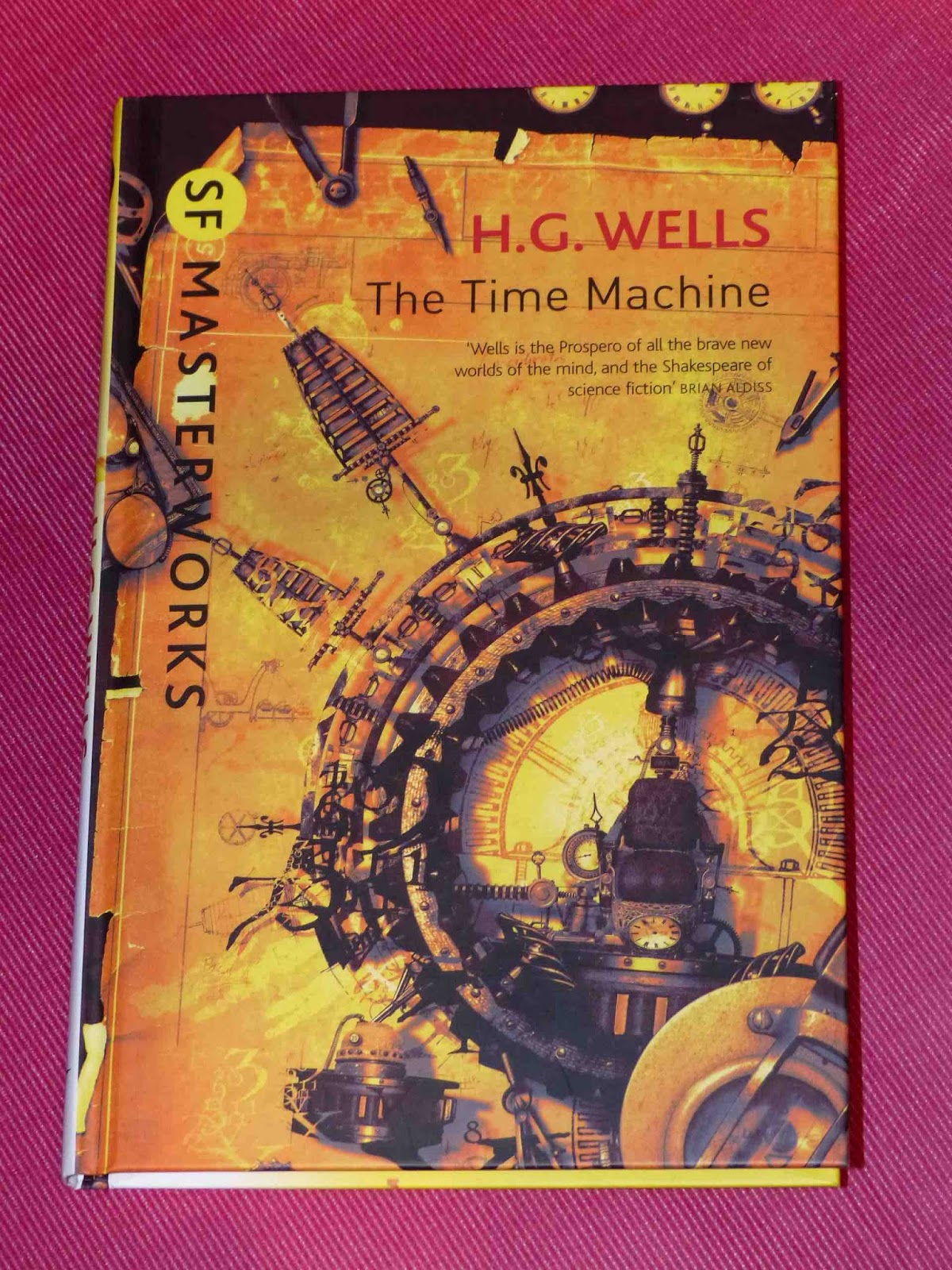
"The Time Machine" by H.G. Wells

“I grieved to think how brief the dream of the human intellect had been. It had committed suicide.”

H.G. Wells wrote dozens of books, but he will always be best remembered for his early science fiction novels, "The Time Machine" and "The War of the Worlds" in particular. I'd read "The Time Machine" before, but it's one of those novels that you can read again and again and still find new things to marvel about.

The unnamed Time Traveller journeys to a future Earth, some 800,000 years from now and discovers the future of humanity: the Eloi, as they are called, have evolved into a peaceful, beautiful, albeit quite childlike race that lives in a seemingly perfect world. Earth has become a Utopia, the Traveller initially concludes, if ever there was one. But then his time machine disappears and he soon finds out there's a second race that's descended from mankind. The cannibalistic Morlocks are an evil and scary race, who live underground and operate the machines that support the Eloi, while at the same time breeding their former masters as livestock. The Time Traveller will have to fight for his life to find his time machine and return to his own era.

H.G. Wells was a very politically engaged author and his political ideas are explored in most of his novels. Sometimes this led to long and preachy books, but not here. Sure, Wells's socialist views are clear: he sees a future in which the upper class (portrayed here as the Eloi) have become lazy and complacent and have allowed the working class (the Morlocks) to take over. This is in essence a story about social degeneration of a society created by the Industrial Revolution. But even without this background, "The Time machine" is a fast-paced, exciting adventure, that fully deserves its legendary status.

Author: H.G. Wells
Title: The Time Machine
Publisher: Gollancz, London
Year: 2010 (orig. 1895)
Number of pages: 127 p.
ISBN: 9780575095175

zondag 18 september 2016

"The Power and the Glory" by Graham Greene

“The world was in her heart already, like the small spot of decay in a fruit.”

Mexico in the 1930s. The Government are hunting down Catholic priests, in their attempt to suppress the Catholic Church. We follow the misadventures of one of them, only know to us as the 'whisky priest'. This priest isn't saintly by any standards. He's not exactly a likeable fellow - a hopeless drunk, who's living with the guilt of having fathered a child. But despite the constant dangers of being caught and killed, he feels compelled to perform his duties as a priest, to attend the sick and hear people's confessions.

Again, I am totally in awe of Greene's writing. His insight into humanity is enormous and as such, the characters in this novel become larger than life. Christian imagery is woven all through the story. The whisky priest is often attributed Christlike qualities by the villagers he meets on his journey, but one of them turns out to be the 'Judas' that will ultimately betray him. The police lieutenant who's pursuing the priest is the novel's 'Pilate'. As usually, Greene is a master at creating atmosphere - in this case the constant sensation of fear of being hunted, caught and executed.

A stellar novel, which proves why Graham Greene was one of the greatest authors ever.

Title: The Power and the Glory
Author: Graham Greene
Publisher: Vintage, London
Year: 2002 (orig. 1940)
Number of pages: xii + 220 p.
ISBN: 9780099286097